StoriesWORKSHOP
Fifteen minutes on a flat floor
Assembly time is a design constraint, not a marketing number. Here is how the eight pieces were timed and what the timing changed.
February 20265 min
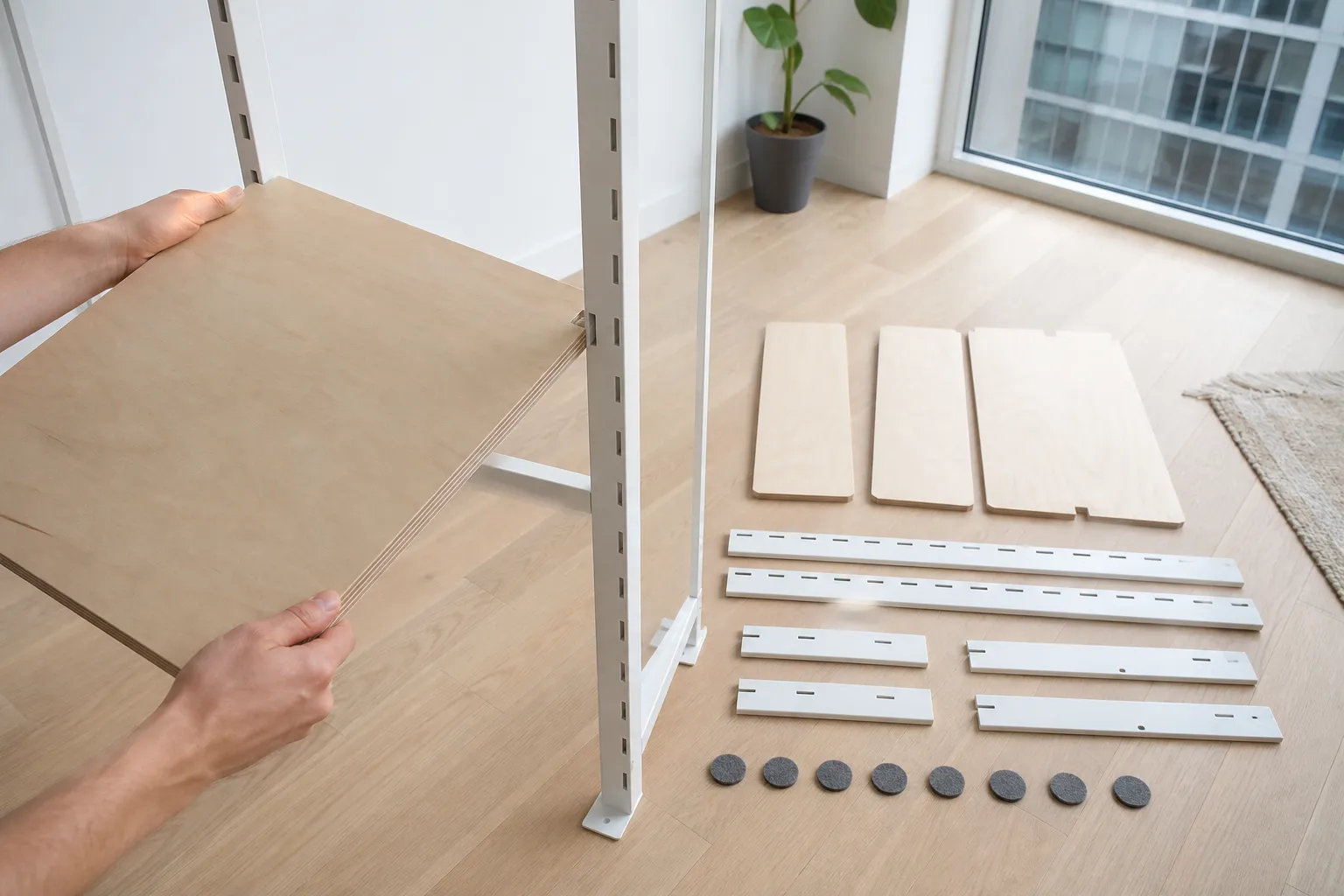
Every piece in the system gets built on the workshop floor by someone who has not built it before. They are given the box, a flat floor, and no instructions beyond the printed sheet that ships inside. Someone else holds a timer. The number that comes out of that is the number on the product page, and across the eight pieces it averages fifteen minutes.
The timing changes the design more than you would expect. An early version of the shelf upright had slots on both faces so it could be turned either way. In testing, that freedom cost about four minutes per column, because people stopped to work out which way was right. The production upright is asymmetric on purpose: there is one way it goes in, and it is obvious from across the room.
The other thing timing exposes is fasteners. Every screw is a small decision, a small tool, and a small chance of a stripped head three years later. The parts that lock under their own load do not have that failure mode at all. Where a fastener is genuinely needed — the low table legs, the desk rail — it threads into a captive nut, so the plywood is never carrying the thread.
None of this makes assembly a pleasure. It makes it short, repeatable, and reversible, which is a more useful promise. The measure we care about is not how fast it goes up the first time. It is whether it goes up the second time just as fast, in a different room, by the same person, four years later.