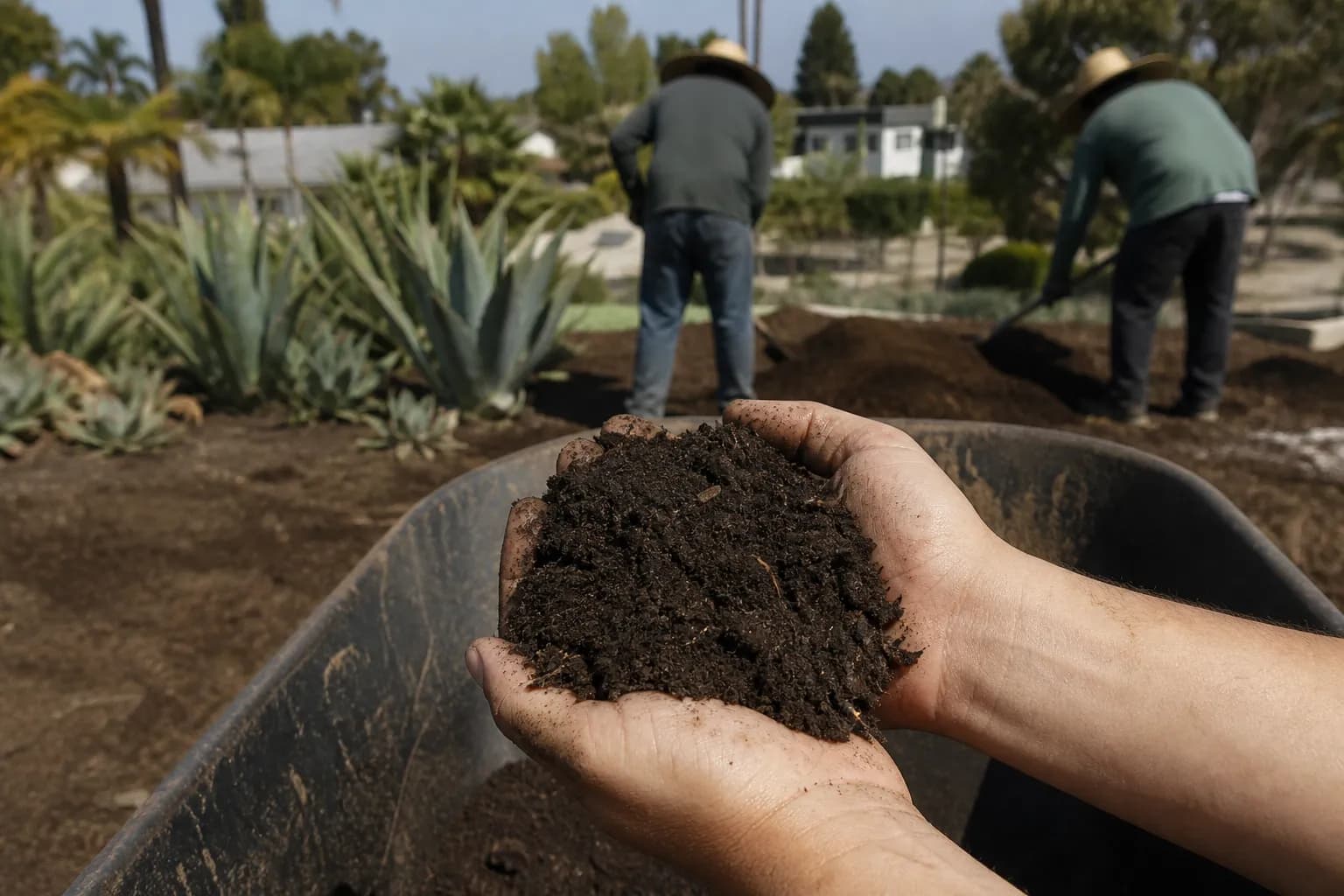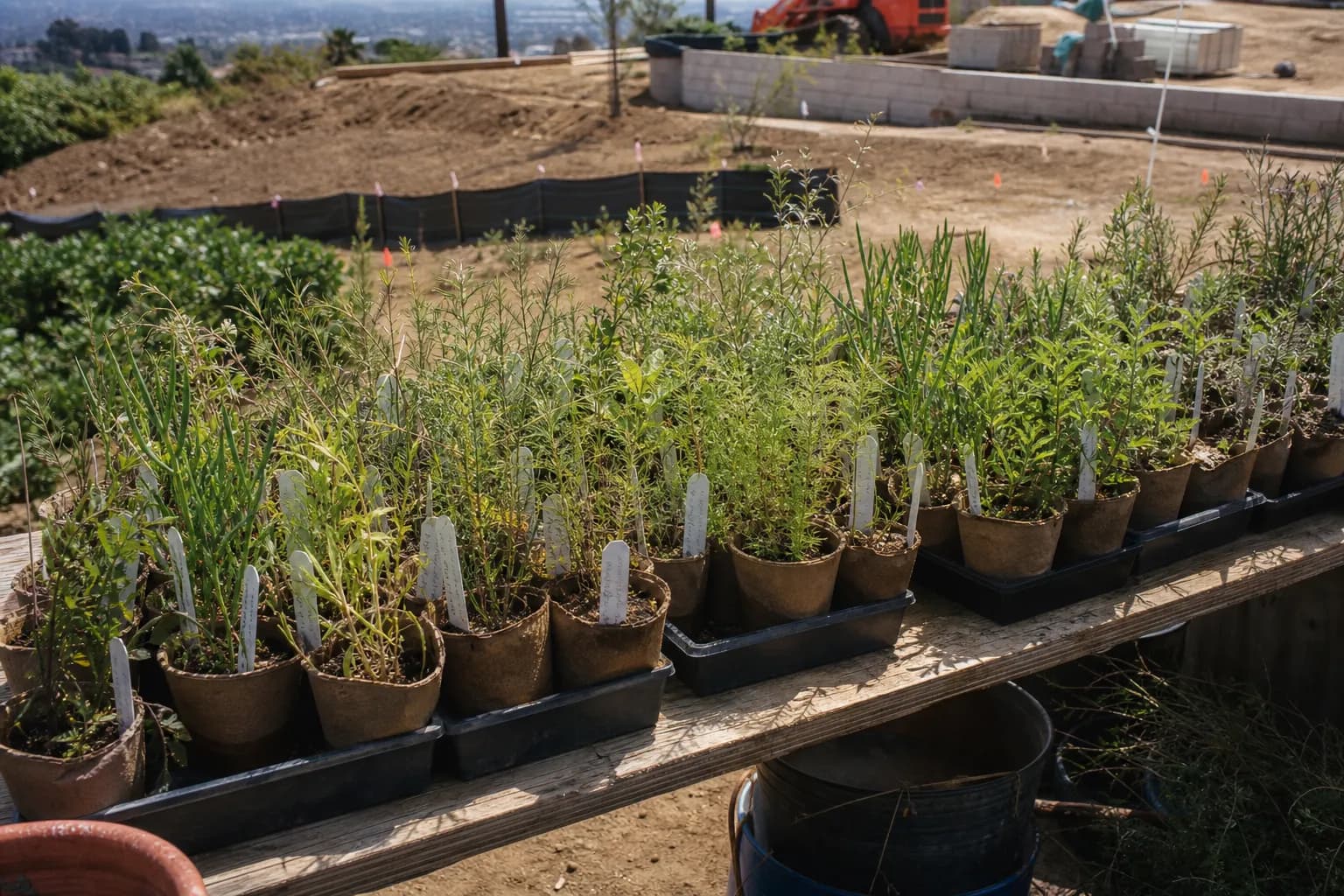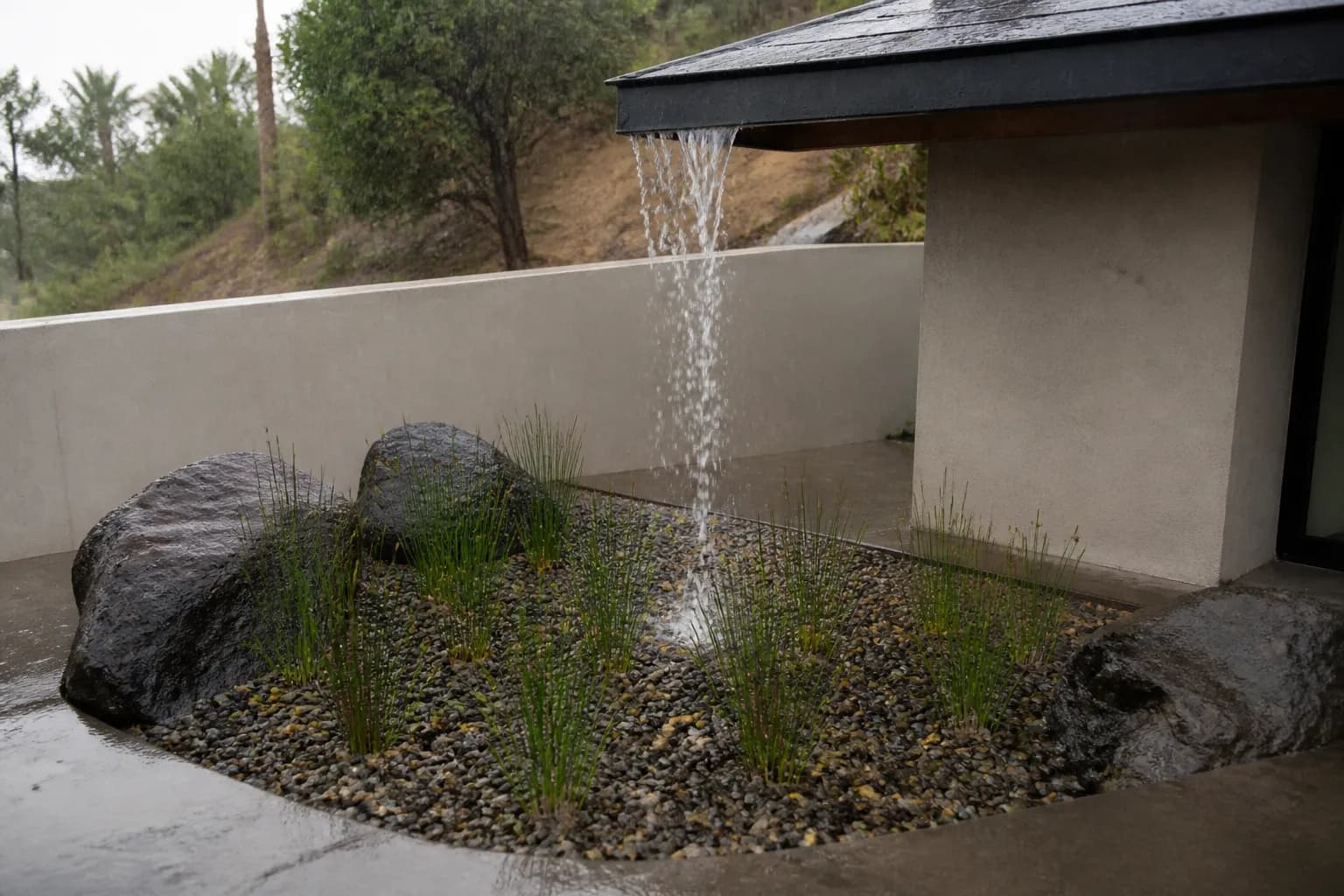
The first drawing we make of a site is usually wrong, because it is made on a dry day. Water does not care about property lines or about the shape a garden is supposed to have. It comes off the roof, crosses the driveway, finds the low corner, and leaves. If you can be on site during a real storm you will learn more in twenty minutes than in a week of measuring.
So we build to the line the water has already chosen. A swale is a shallow dish, not a trench; it slows water down and gives it somewhere to sit long enough to soak in. Depth matters less than length and less than what is planted along it. Rushes and sedges at the invert, then sages and buckwheat up the sides where the soil dries out fastest.
The mistake we see most often is a basin built too deep and too small, so it holds a puddle for three days and kills whatever is in it. If you are guessing, go wide and shallow. You can always cut it deeper after the first winter, and the first winter is the only honest test there is.